


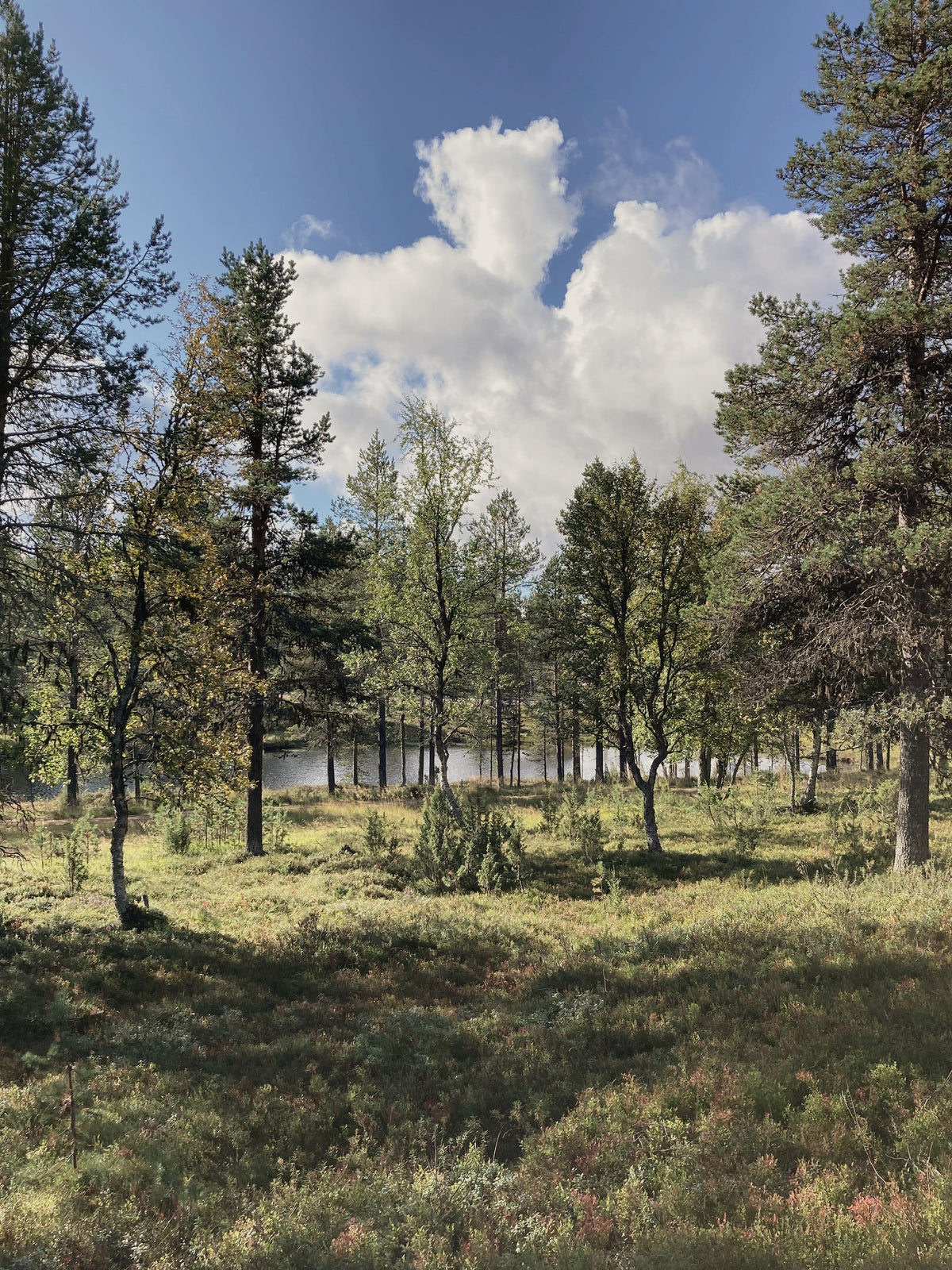
The Wood That's Left Behind
Every year, the forest industry leaves a mountain of surplus behind. Offcuts that never make it into lumber. Bark and fiber with no place in a roll of paper. Most of it gets burned or thrown away, treated as a cost of doing business rather than anything worth a second thought. But somewhere in that pile, a different question started to take shape. What if this leftover wasn't waste at all, just a material nobody had bothered to look at properly yet.
A Material Worth a Second Look
Look closely enough at that surplus, at how its fibers hold together and how the structure behaves under pressure, and the waste label starts to fall apart. What's left is something with real character. Strong where it needs to be strong, flexible where it needs to give, and surprisingly pleasant against the hand. Exactly the kind of qualities you'd want in a shoe, not a woodpile destined for the furnace.
An Old Idea, Put to New Use
None of this comes out of nowhere. Wood has shaped Nordic craft for generations, turning up in tools, furniture, and footwear long before anyone called it sustainable. Working with forest surplus doesn't break from that history, it picks it back up. Same instinct, same materials at hand, just aimed at a problem nobody had solved with them yet.
Why Shoes
A shoe asks a lot of its material. It has to flex with every step, hold its shape through thousands of miles, and take a beating without giving up. Forest surplus, once its structure was understood, turned out ready for exactly that job. Nobody set out with the idea of building a shoe from wood. The material showed up, the need was already there, and the two turned out to fit each other better than anyone expected.